Shopping for a small greenhouse can get out of hand surprisingly fast. You start with a few seedlings and end up comparing cedar buildings with pergolas, electricity and enough room to develop a serious plant problem.
I went with Backyard Discovery. I love the build quality, I think the greenhouses are absolutely beautiful, and the assembly went together wonderfully in our experience. The smaller one gets my vote for a more manageable garden setup. The larger Backyard Discovery is the one I would consider when growing space—and the finished look—justify the bigger commitment.
That praise comes with an assembly reality check: plan for two strong adults and about three full days for the smaller greenhouse, or about five full days for the bigger one. Those are my planning estimates from our experience, not guaranteed build times.
Here I’m comparing the Backyard Discovery Poppy 11 × 7 and Bellerose XL 13 × 11 with six other linked greenhouse kits. Some are compact; the 10 × 18 and 8 × 16 options are substantial structures. A smaller price or a familiar size label does not make them equivalent.
My firsthand comments apply to Backyard Discovery. The other greenhouse comparisons below come from their product listings and available manufacturer information; I have not built all eight. Images are listing images, not photos of my own yard.
Affiliate disclosure: As an Amazon Associate I earn from qualifying purchases. I may earn a commission if you use these links. A commission does not get to rewrite what I think.
The greenhouse kits at a glance
| Greenhouse | Advertised size | What stands out |
|---|---|---|
| Backyard Discovery Poppy | 11 × 7 ft | My smaller pick: cedar, shelves and powered ventilation |
| Backyard Discovery Bellerose XL | 13 × 11 ft | My larger pick: more interior room and attached pergola |
| LYNSLIM wooden greenhouse | 8 × 8 ft | Cedar listed; 6 mm panels and folding pot rack |
| Jocisland wooden greenhouse | 10 × 18 ft | Long growing space; partly preassembled components |
| AECOJOY wood greenhouse | 6 × 10 ft | Wide opening front windows and fold-down shelf |
| HOWE chalet greenhouse | 12 × 10 × 8 ft | Black aluminum frame, double doors and roof vents |
| Zeljiaid walk-in greenhouse | 8 × 16 ft | Long aluminum-frame layout; door details need checking |
| Garvee aluminum greenhouse | 6 × 10 ft | Compact growing enclosure; panel description needs checking |
Sizes above are the sellers’ model labels, not verified foundation dimensions or unobstructed growing areas. Prices, delivery costs and selected variants can change; each button opens the exact listing compared here.
Why Backyard Discovery earned my money
For me, the attraction was more than a pretty picture. The quality of the build and the way everything went together made the choice feel worthwhile. These are structures I enjoy looking at, which counts when something is going to live in your yard.
The equipment package also helps explain the difference. Both linked Backyard Discovery models include cedar framing, four-wall polycarbonate panels, staging shelves, a temperature-activated exhaust fan, operable windows, hose connections and a PowerPort with electrical outlets and USB ports. You still need to provide the power source.
That gives you a useful starting setup. When comparing prices, I would add the cost of benches, ventilation and other items to a more basic kit before deciding which is the better value. Compare the whole setup you intend to use.
Backyard Discovery Poppy 11 × 7: my smaller pick
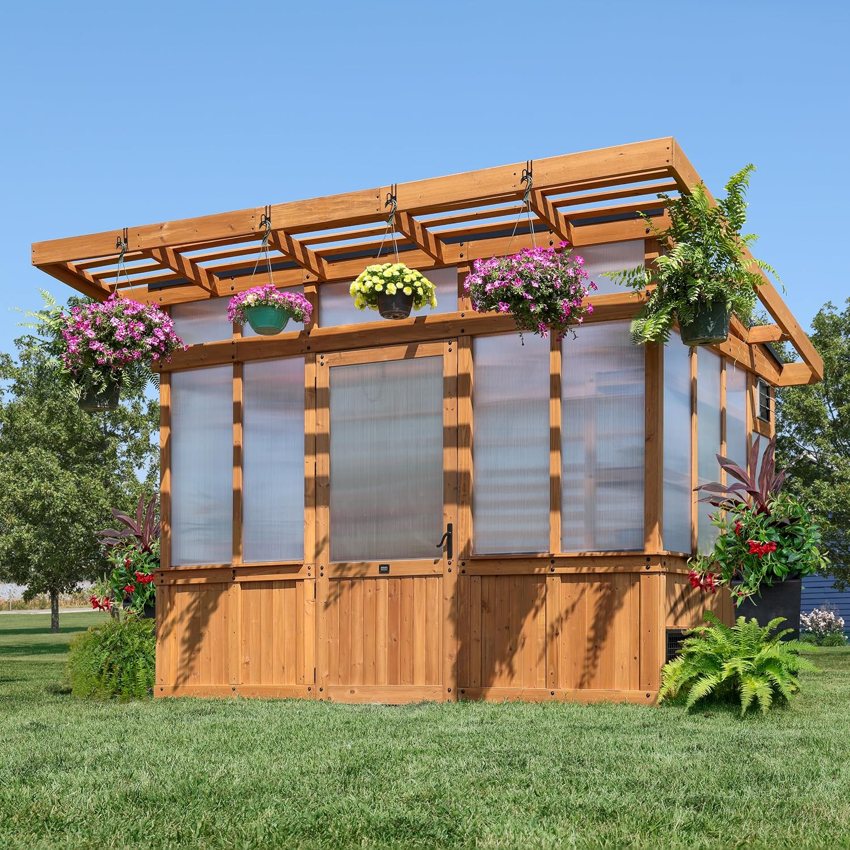
The Poppy is the greenhouse shown at the top. Backyard Discovery lists about 78 square feet of interior space, with a workstation, upper and lower shelves and a four-tier staging rack. I like that the storage is part of the design instead of something you have to plan from scratch.
The pergola overhangs give it a finished garden look without turning the entire structure into an enormous project. This is the one I would choose when I want the Backyard Discovery package but need to be realistic about the yard.
The catch is the outside size. The manufacturer’s overall dimensions are approximately 12.9 feet wide by 9.4 feet deep, including the projecting structure. The “11 × 7” name is not the space you should simply mark out and build a foundation inside. Use the current foundation drawing.
Backyard Discovery Bellerose XL 13 × 11: the bigger commitment
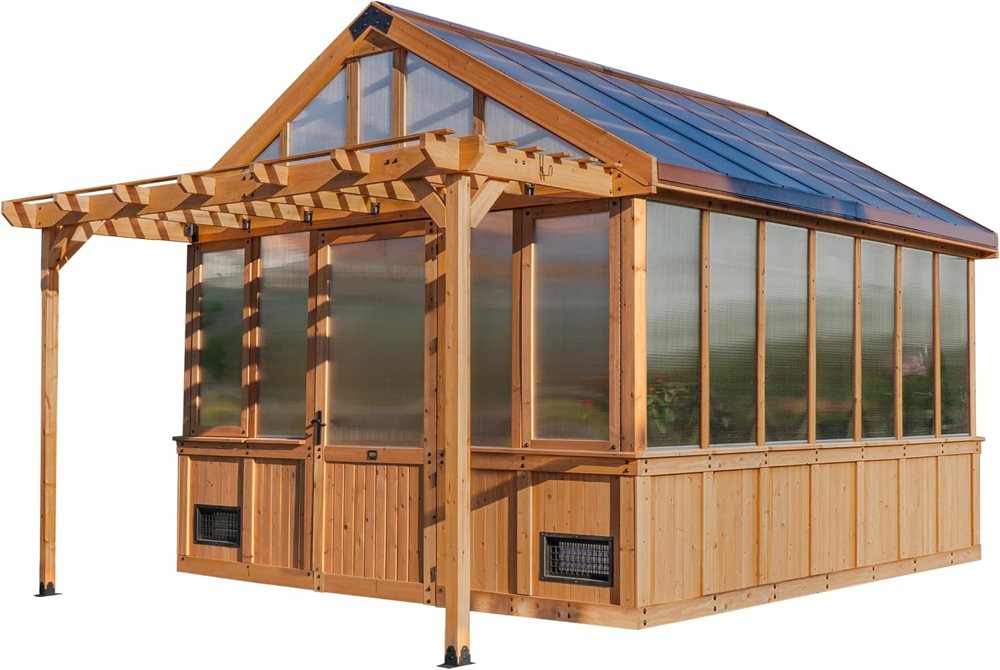
The Bellerose XL takes the same idea into a larger greenhouse with an attached pergola. Backyard Discovery lists 143 square feet of interior space, with lower and upper staging shelves and room to plan a more substantial growing setup.
It is absolutely beautiful to me. If the larger greenhouse fits your plans, I understand choosing it for both the room and the appearance. I would want to know what I was putting in that extra space, though. More greenhouse also means more foundation, more assembly and more space to manage.
Its published overall dimensions are roughly 17.4 feet wide by 12.3 feet deep, so allow for the pergola and projections. One specification deserves a check with the seller: the current manufacturer page mentions both two and four opening windows in different sections. Confirm the version being supplied.
Assembly: lovely to build still means several full days
When I say these go together like a dream, I am praising how the build came together. I am not saying you should invite somebody over after lunch and expect to be potting plants by dinner.
| Backyard Discovery size | My planning estimate | People |
|---|---|---|
| Smaller Poppy | About 3 full days | 2 strong adults |
| Larger Bellerose XL | About 5 full days | 2 strong adults |
Experience, weather, tools and the condition of your site can change that timeline. Follow the manual’s lifting and helper requirements for each step. I would budget additional time for site preparation and any power or water work, rather than squeezing those jobs into the assembly plan.
Backyard Discovery provides pre-cut, pre-drilled pieces and BILT instructions. Read through the instructions before the boxes arrive, organize the parts and have a level, suitable base ready. Good preparation gives the actual assembly a much better chance of being enjoyable.
LYNSLIM 8 × 8: a wooden alternative for a compact layout
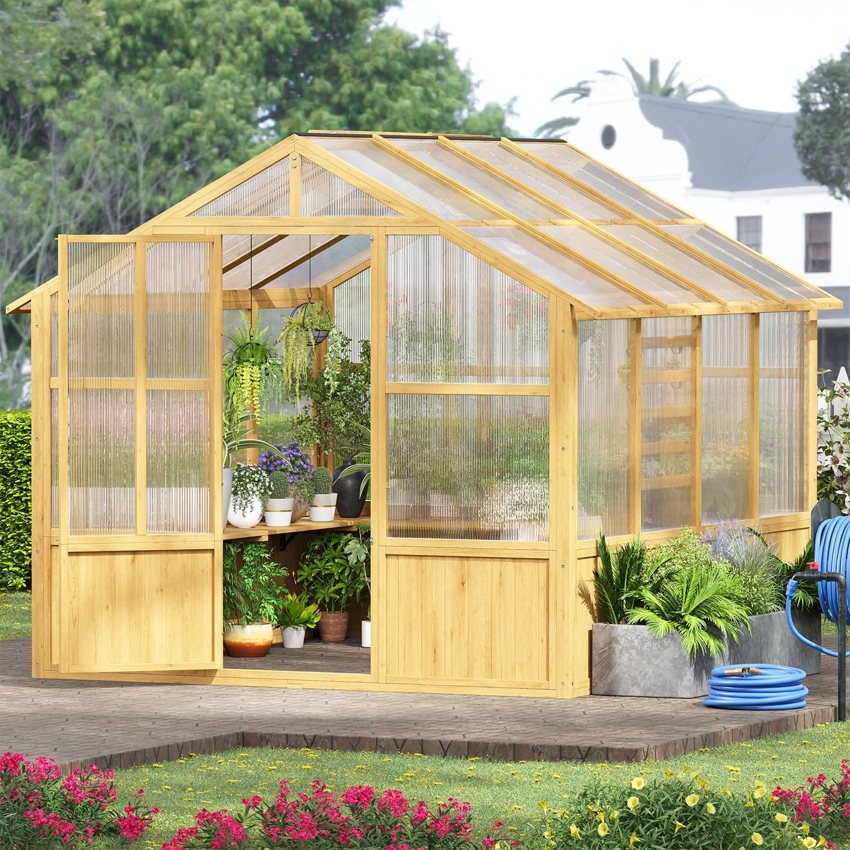
The LYNSLIM listing describes a cedar frame with steel reinforcement, 6 mm polycarbonate panels, adjustable roof vents and a folding pot rack. That combination interests me for someone who wants the wood look in a squarer layout.
A useful distinction: openings prepared for a fan or water pipe do not necessarily mean the fan and plumbing equipment are supplied. I would confirm the included parts and anchoring requirements. I also would not treat the listing’s broad storm-resistance language as equivalent to a documented weather rating.
Jocisland 10 × 18: plenty of length, with details to verify
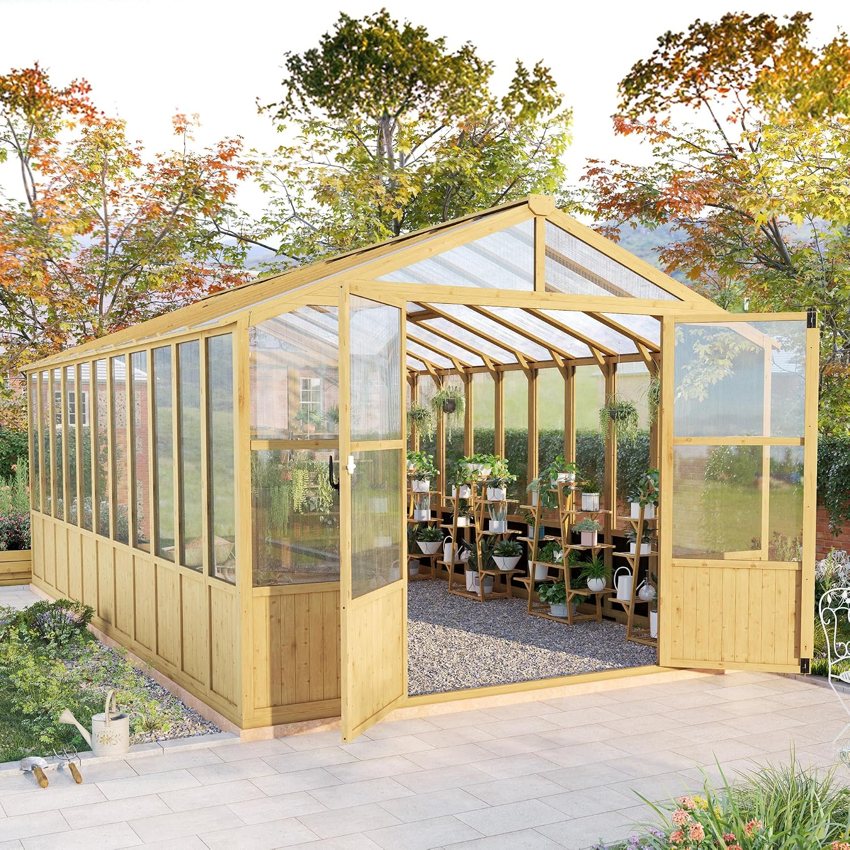
This is a much larger option than the phrase “small greenhouse” suggests. The linked Jocisland listing describes a wooden frame, polycarbonate panels, two adjustable windows and partially preassembled walls, doors and windows.
The long layout could suit rows of plants with a central aisle. But I would ask for the assembly manual and foundation drawing before ordering: the listing’s dimension table uses inches where the product title describes feet. That apparent unit error is a reason to verify the drawing, not to guess at a base.
AECOJOY 6 × 10: the one with the opening front
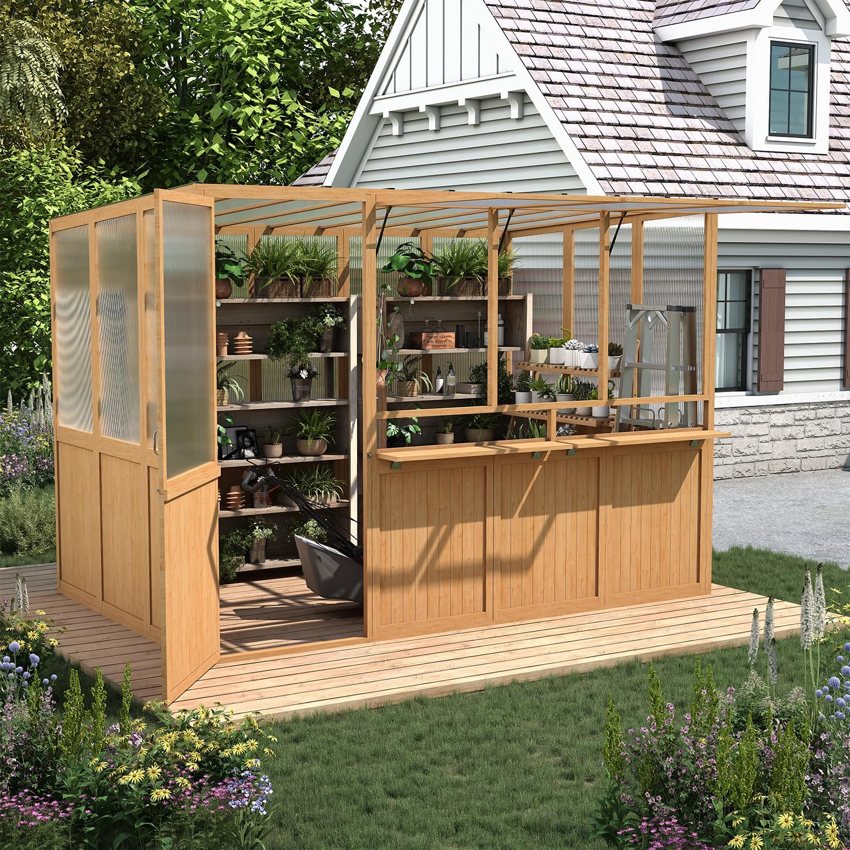
AECOJOY’s sloped-roof design has broad opening front windows and a folding shelf. The manufacturer identifies the frame as fir wood and describes about 58 square feet of space. I like the access and the way it could serve as a small potting area.
It is marketed as a lean-to design, so confirm the intended installation and support requirements for your site. The opening windows are an appealing feature; they do not by themselves tell us how the whole structure handles your local weather.
HOWE 12 × 10: the black chalet look
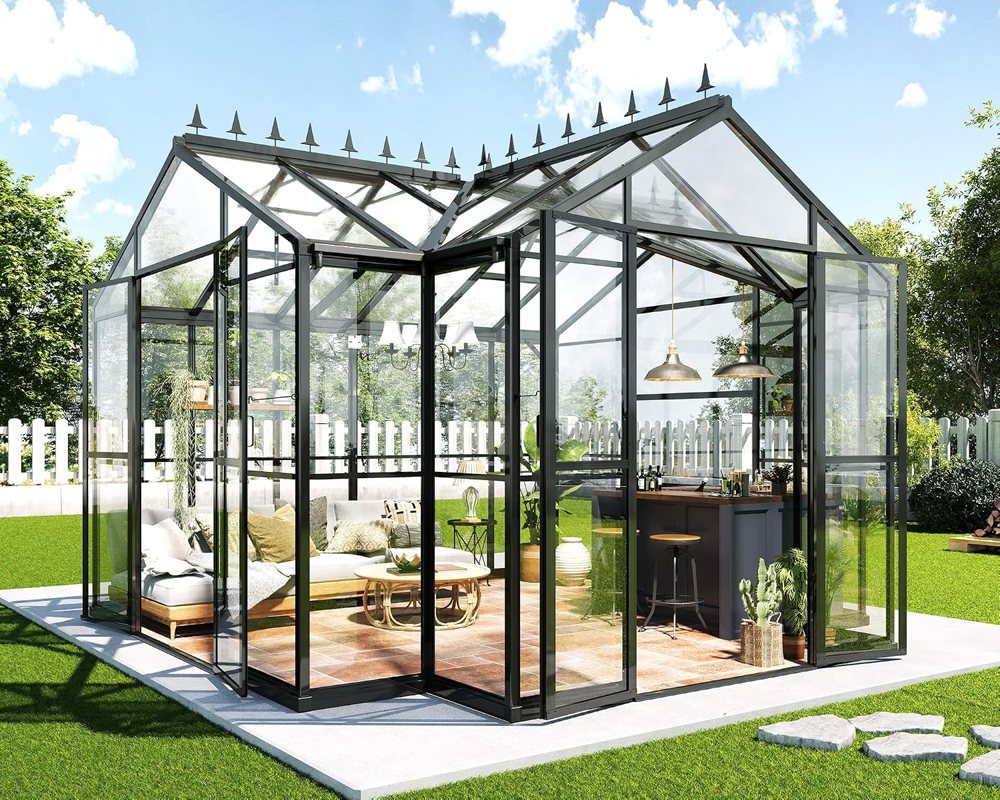
If you prefer a black frame to cedar, this HOWE greenhouse is visually quite different. The listing describes aluminum construction, quick-connect fittings, double hinged doors, two roof vents and gutters.
The seller estimates around ten hours with three people. That is the seller’s estimate, and I would not compare it directly with my Backyard Discovery experience as though we timed identical projects. Check the listed foundation recommendation—approximately 12 feet 6 inches by 10 feet 6 inches—and verify which panels and accessories the kit includes.
Zeljiaid 8 × 16: long growing space, unclear door description
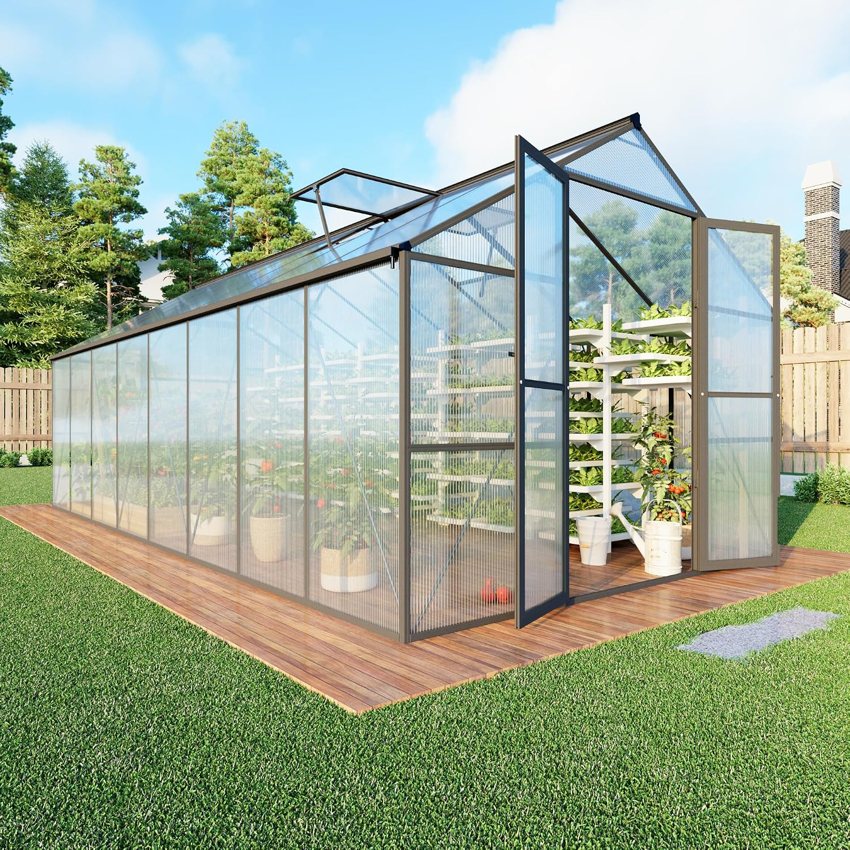
The brand on this linked 8 × 16 listing is Zeljiaid. It describes an aluminum frame, polycarbonate panels, roof ventilation and a gutter system. The long shape may appeal if you want to arrange plants along both sides.
My hesitation is the inconsistent door description: one part refers to a sliding door, while another specifies an outward-opening swing door. Door movement affects the layout outside as well as inside. I would get that detail, the anchoring plan and the written warranty confirmed before spending money.
Garvee 6 × 10: a smaller aluminum option
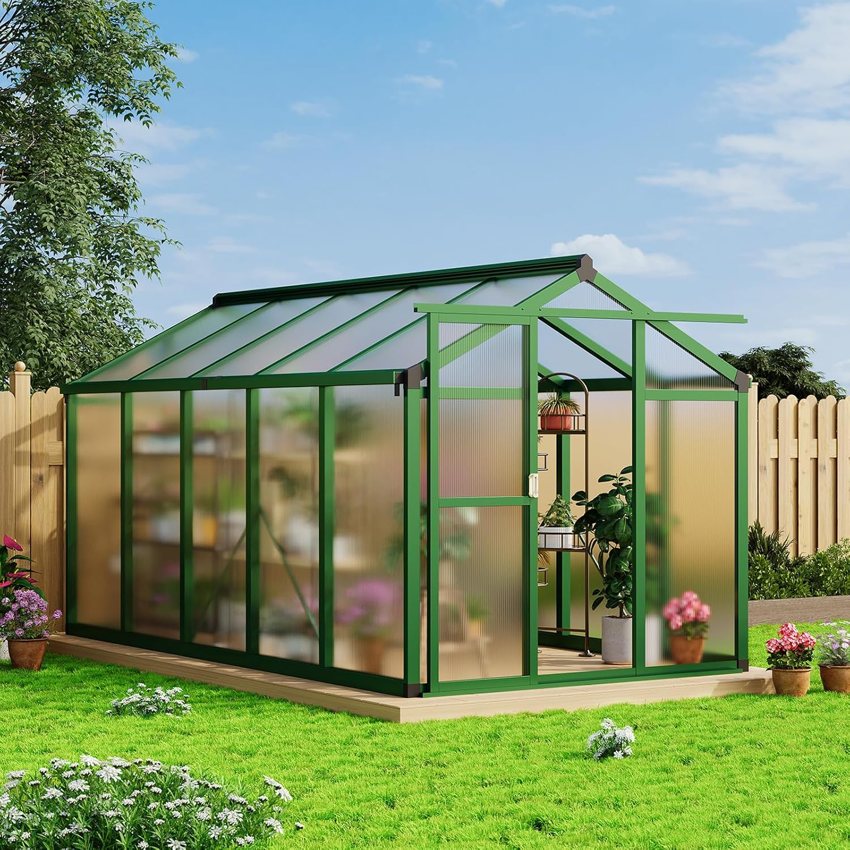
The Garvee is an option to investigate if you want a compact enclosure with an aluminum frame, roof vent and drainage features. Its nominal 6 × 10 footprint is easier to consider for a smaller garden than the long Jocisland or Zeljiaid models.
I would clarify the glazing before buying. The listing calls the panels polycarbonate in several places but refers to PET in an assembly bullet. Those are different materials. Ask which panels ship with the selected model and request documentation for the stated load capacity; a large number in a sales bullet is not enough detail for a foundation or weather decision.
What I would include in the real greenhouse budget
The site and foundation. Price the preparation, base, drainage and manufacturer-specified anchoring as part of the purchase. Check any local placement or permit requirements before committing to a location. Decorative decks in listing images are not automatically included.
The growing environment. A greenhouse enclosure is not a heater or air conditioner. Your climate and plants may require winter heat, summer shade or additional ventilation. UMass Extension explains why ventilation and shading matter; plan temperature management around your crops and site.
Maintenance and support. Backyard Discovery advertises a five-year warranty on these models, subject to its terms. Its weather ratings depend on anchoring as specified in the manual. Read the current care and sealing requirements, and ask about replacement panels and hardware for whichever brand you choose.
The complete growing setup. Compare shelving, fans, electrical supply, water access and installation costs. A basic shell can still be the right purchase, but it is a different package from a greenhouse with a workstation and powered ventilation already supplied.
My final choice
I would choose Backyard Discovery again. The quality, the way the build went together and the finished appearance made it worth it to me. The Poppy is my pick for the smaller setup; the Bellerose XL makes sense when the extra room and pergola fit both the garden and the budget.
The other kits may suit someone with different space, style or spending priorities. I would verify their specifications before treating them as interchangeable with the Backyard Discovery package.
And please believe me about the assembly time. Put two capable adults on the calendar, give yourselves those full days, and let the project be a project. The beautiful greenhouse at the end is the part you get to enjoy for much longer.
Sources and review basis
Backyard Discovery details were checked against its Poppy product page and drawings, Bellerose XL product page and drawings, and greenhouse buying guide. AECOJOY details were cross-checked with its 6 × 10 product page. The other specifications come from the exact linked Amazon listings and are identified as seller claims. Assembly estimates and Backyard Discovery opinions reflect my own experience.
More honest comparisons are in The Test Bench.
Love,
Honey
 Honey, Be Honest
Leave a comment