Honey’s quick take
Amazing for room to grow: EcoFlow DELTA 3 Plus offers the most expansion and solar-input headroom here. Extra capacity means buying extra hardware.
Good for a lighter all-in-one: Anker SOLIX C1000 Gen 2 has the highest continuous AC output and the lowest listed weight of these three. Its battery capacity cannot be expanded.
Mid as a fresh purchase: The original Anker SOLIX C1000 is heavier and less powerful than Gen 2. It still has a reason to exist if you already own its compatible expansion battery or find a meaningful discount.
Affiliate disclosure: As an Amazon Associate I earn from qualifying purchases. Honey Be Honest may earn a commission when you buy through these links, at no extra cost to you.
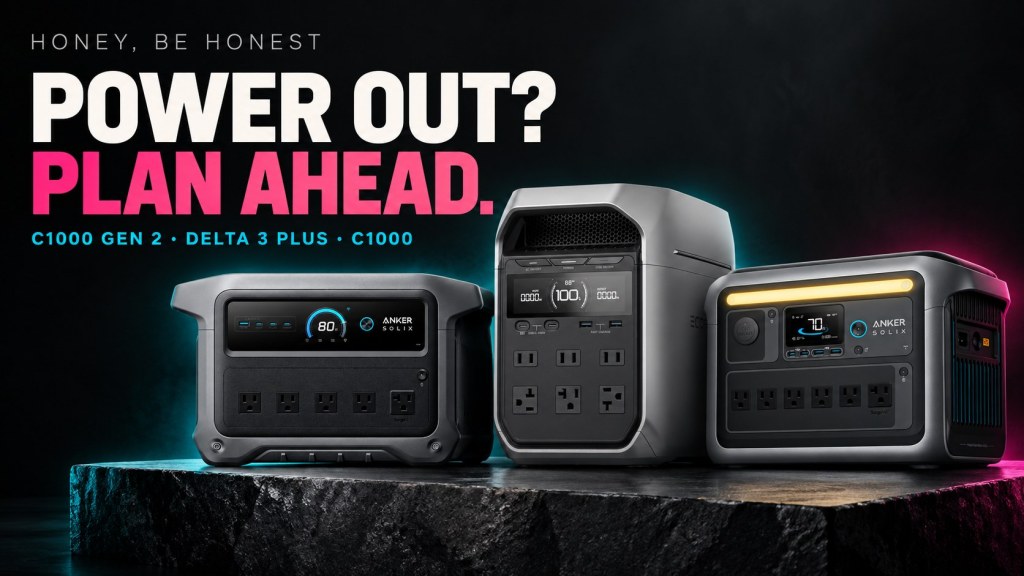
How we compared: We checked current manufacturer specifications and the exact U.S. Amazon listings on September 12, 2026. We have not tested these stations ourselves. Amazing, Good and Mid describe buying fit, not lab scores. The cover is conceptual HBH editorial artwork; the separate product photos below are manufacturer press images.
The Anker SOLIX C1000 Gen 2 vs Anker SOLIX C1000 vs EcoFlow DELTA 3 Plus decision has one detail I would circle before opening my wallet: the newer Anker loses battery expansion. That is fine for a fixed shopping list of essentials. It matters a lot if your plan is to add more storage next year.
Start with what you need to keep running and for how long. A phone, a lamp and a laptop make a very different shopping list from an electric heater. The biggest watt number on the box does not tell you how long the battery lasts.
C1000 Gen 2 vs C1000 vs DELTA 3 Plus at a glance
| Model | Battery / continuous AC output | Expansion |
|---|---|---|
| Anker SOLIX C1000 Gen 2 | 1,024 Wh / 2,000 W | Fixed battery capacity |
| Anker SOLIX C1000 | 1,056 Wh / 1,800 W | Expandable to 2,112 Wh |
| EcoFlow DELTA 3 Plus | 1,024 Wh / 1,800 W | Expandable to about 5 kWh |
These are manufacturer ratings for the base stations. Extra batteries and solar panels are separate purchases. Surge, X-Boost and SurgePad claims are not interchangeable with the continuous AC ratings in this table. Gen 2 specifications · Original C1000 specifications · DELTA 3 Plus specifications
EcoFlow DELTA 3 Plus: Amazing if your backup plan may grow
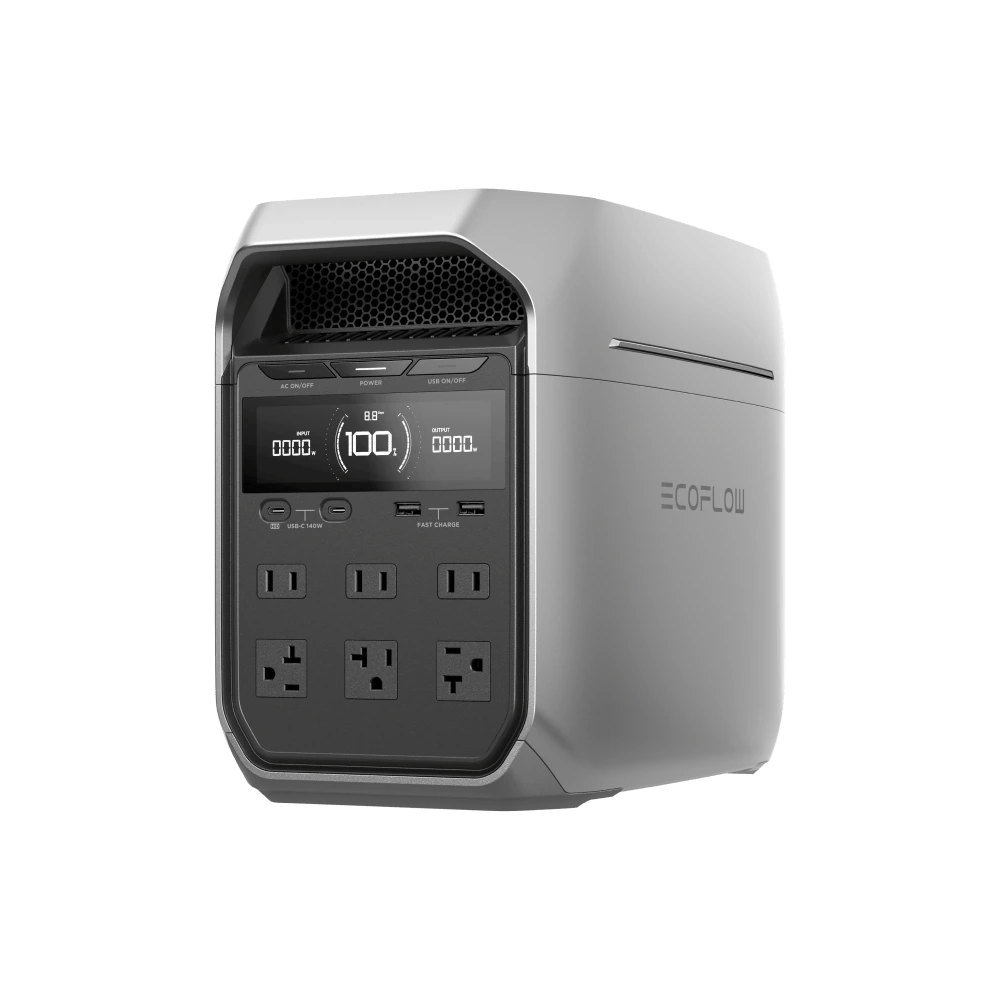
The DELTA 3 Plus starts with 1,024 Wh of storage and 1,800 W of continuous AC output. Its useful advantage is the path beyond that first box: compatible EcoFlow extra batteries can take the system to roughly 5 kWh. Check the exact battery and required cable before purchasing; compatibility does not mean every EcoFlow battery connects the same way.
It also has two solar inputs rated for up to 500 W each, for 1,000 W combined. That gives it more potential solar charging capacity than either Anker here. You still need compatible panels and appropriate conditions. Two sockets do not make a shaded campsite sunny.
The catch: Expansion adds cost, weight and another piece of equipment to store. If you only want a station to carry to a desk during an outage, you may pay for flexibility you never use. Its normal AC output is also lower than Gen 2’s 2,000 W.
Check the standalone DELTA 3 Plus and current price on Amazon
Anker SOLIX C1000 Gen 2: Good for a fixed list of portable essentials
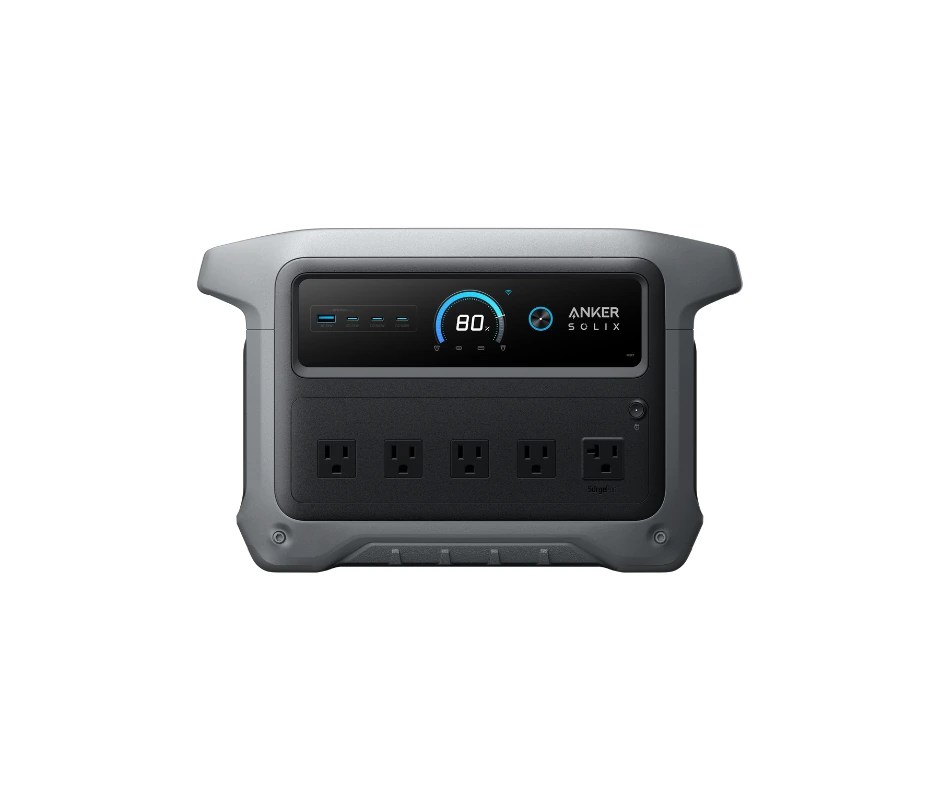
Gen 2 pairs a 1,024 Wh battery with 2,000 W of continuous AC output. Anker lists its weight at 24.9 pounds, compared with 28.44 pounds for the original C1000. That roughly three-and-a-half-pound saving is a practical upgrade when you regularly move the station between the house and a vehicle.
The trade-off is permanent: Anker explicitly says Gen 2’s capacity cannot be expanded. Do not order the original C1000’s expansion battery expecting it to work here. The shared C1000 name makes this an easy detail to miss.
Its solar input is rated up to 600 W. Anker advertises a 49-minute full AC recharge using the app-enabled UltraFast mode and a suitable supply. That is a manufacturer claim under specified conditions, not a time we measured in a kitchen outlet.
Who should pass: Someone already expecting to need substantially longer runtime later. Higher output lets you power an appropriate larger load, but it does not create a larger fuel tank. For future storage growth, compare the EcoFlow route before buying.
Check the standalone C1000 Gen 2 and current price on Amazon
Anker SOLIX C1000: Mid unless the older model solves a specific problem
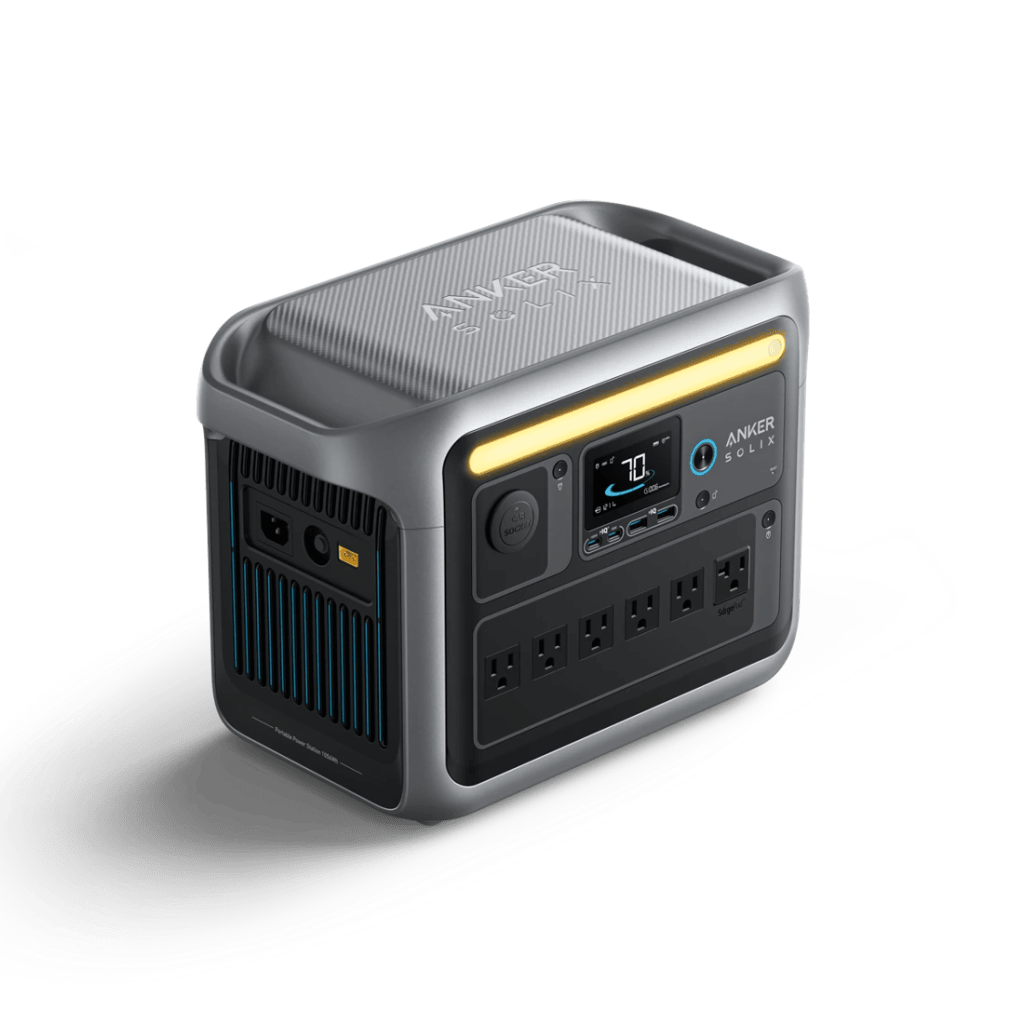
The original C1000 has a slightly larger 1,056 Wh battery, 1,800 W of continuous AC output and six U.S. AC outlets. Gen 2 has five AC outlets. One extra socket is convenient for several small devices, but the combined load still has to stay within the station’s limits.
Its strongest argument is the compatible BP1000 expansion battery, which brings capacity to 2,112 Wh. That can matter if you already own one. For a first purchase, price the complete station-and-battery setup rather than assuming the older station is automatically a bargain.
The original supports up to 600 W of solar input. Anker advertises a 58-minute full recharge in its fast AC charging mode. The selected Amazon listing includes AC and car charging cables; it does not include a solar panel or an expansion battery.
The catch: It weighs more than Gen 2 while offering less continuous output. The extra 32 Wh in its base battery is only about three percent more nominal energy. That small difference alone would not persuade me to carry the heavier unit.
Check the original C1000 with car charging cable on Amazon
How long will a 1,024 Wh power station actually run?
Watts describe how quickly a device uses power. Watt-hours describe stored energy. A simple example: 1,024 Wh divided by a steady 100 W load is 10.24 hours before losses. That is arithmetic, not a tested runtime. AC conversion losses, the station’s own consumption, settings and operating conditions reduce the useful result.
For equipment that cycles on and off, the nameplate alone may not describe average consumption. A refrigerator can also have a starting surge. Check both starting power and energy use for the exact appliance. None of these base stations should be treated as an automatic answer for every appliance in the house.
Write down the devices you actually intend to connect. Add their simultaneous power needs, then estimate the energy required over your chosen period. That exercise is less glamorous than a giant sale banner and much more useful when the lights go out.
Solar charging, fast charging and the extras to price first
The selected links are for the stations themselves. A compatible solar setup needs the correct panel voltage, current, connector and any required cable. A panel’s advertised wattage alone does not establish compatibility. The DELTA 3 Plus accepts up to 500 W per input; you cannot assume one input accepts the full 1,000 W combined rating.
For AC charging, the published full-charge claims are 49 minutes for Gen 2, 56 minutes for DELTA 3 Plus and 58 minutes for the original C1000. Treat those as manufacturer claims, not a head-to-head speed test. Charging mode, available input power and conditions matter more than a seven-minute marketing gap.
A surge protector serves a different purpose: it does not store backup energy. Likewise, do not assume a power station’s advertised UPS mode suits every computer or storage device. Check its transfer-time specification and your equipment’s requirements before relying on it.
Honey’s buying rule: choose the battery plan before the badge. DELTA 3 Plus makes the strongest case for expanding later. Gen 2 makes sense when you know your needs and want less weight. The original C1000 needs a specific advantage—compatible gear you own or a real price saving—to earn its place in a new cart.
Sources and exact-model check
This comparison uses Anker C1000 Gen 2, original Anker C1000 and EcoFlow DELTA 3 Plus documentation, plus the exact Amazon listings linked above. We checked the U.S. station variants on September 12, 2026. Prices, bundles and seller terms can change. Check the selected model, included accessories and return policy before checkout.
 Honey, Be Honest
Leave a comment