THE VERDICT
Philips SmartSleep HF3520/60 is my pick. I went into this comparison caring about one thing more than all the fancy bedtime extras: how much useful wake-up light am I actually getting? Philips publishes a 300-lux maximum, gives me 20 brightness settings, and moves from red to orange to yellow over an adjustable 20–40 minute sunrise. That is exactly what I want a sunrise alarm clock to be good at: the sunrise.
Hatch Restore 3 is prettier, smarter and far more customizable. It is the better choice if you want a whole bedtime routine with sleep sounds, app setup, phone-free bedside controls and a huge audio library. But if I am paying premium money because I want light to help drag my brain out of the cave before coffee, Philips wins this one for me.
My first choice: Philips SmartSleep HF3520/60 on Amazon →
Philips vs Hatch: the useful comparison
| What matters | Philips SmartSleep HF3520/60 | Hatch Restore 3 |
|---|---|---|
| HBH winner | Best if brightness is the priority | Best if the whole sleep routine matters more |
| Published light output | 300 lux | No directly comparable lux figure published by Hatch |
| Sunrise | Red → orange → yellow | Customizable sunrise routines and colors |
| Sunrise timing | Adjustable 20–40 minutes | Customizable through the Restore routine |
| Brightness control | 20 settings | Adjustable light plus app-based routine controls |
| App | Not needed | Phone is needed for setup; bedside controls handle routine use afterward |
| Subscription | None | Works without Hatch+; subscription adds a much larger content library |
| Sound | 5 wake sounds + FM radio | Much stronger sound/content ecosystem |
| Body colors | White | Putty, Greige, Cocoa |
| Best for | “Please make morning look like morning.” | “Please manage my entire bedtime personality.” |
Important: lux and lumens are not interchangeable. Lux describes light reaching an area; lumens describe total light output. Placement also matters. A great sunrise alarm pointed at the wall from six feet away is basically an expensive glowing witness to you oversleeping.
Why I would buy Philips first
The Philips HF3520/60 is refreshingly focused. Philips lists 300 lux at maximum intensity, 20 brightness settings, two alarms, five wake-up sounds, FM radio, sunset simulation and an adjustable 20–40 minute colored sunrise. No app. No Wi-Fi. No subscription decision before I have located my glasses.
That does not make it the fanciest clock here. It makes it the one whose strongest feature lines up best with the reason I am shopping. I do not need my alarm clock to have a personal growth journey. I need the bedroom to stop looking like 2:17 a.m.
Check the Philips SmartSleep HF3520/60 on Amazon →
I also compared this model with another Philips and a Lumie in my earlier Philips HF3520 vs HF3650 vs Lumie Spark 100 comparison if you want to go further down the sunrise-clock rabbit hole.
Where Hatch Restore 3 is better
Hatch Restore 3 absolutely earns points for being the more complete sleep device. Hatch says Restore 3 is built around gentle, phone-free sleep routines after setup, with physical controls on the clock and a large library of sleep and wake content. Hatch+ expands that library even further, but the clock can still be used without keeping the subscription.
It also wins the beauty contest. Current Restore 3 colors are Putty, Greige and Cocoa. If you want something that blends into a carefully decorated bedroom instead of announcing “HELLO, I AM THE LIGHT MACHINE,” Hatch has the advantage.
My issue is not that Hatch is bad. It is that most of what makes Hatch special is not the thing I care about most in this comparison. If white noise, meditations, bedtime routines and audio are equally important to you, I can make a very good argument for Hatch. If brightness is the whole point, I still land on Philips.
Check the Hatch Restore 3 on Amazon →
Want cheaper? Here are the five I would look at next
| Model | Price tier when checked | Color/finish options observed | Why it made my list |
|---|---|---|---|
| DEKALA Pulse Wake | Under $100 | Warm Putty, White, Walnut | Most interesting light-first budget alternative |
| Dreamegg Sunrise 1 | Under $100 | Classic White | Balanced sunrise + sound-machine value |
| JALL Full-Screen | Under $50 | White housing; multiple light colors | Best cheap way to test whether sunrise alarms work for you |
| REACHER R7W | Under $50 | Wood Grain | Best-looking cheap option |
| Geuuap Sunrise Alarm | Under $50 | Khaki | Newer budget alternative with Bluetooth |
Price buckets and color/finish options reflect the listings I checked while preparing this guide. Amazon loves changing prices and variations while I am emotionally attached to a spreadsheet, so verify the final price and available color before checkout.
Under $100: DEKALA Pulse Wake
If Philips is more than you want to spend, DEKALA is the budget option that makes me stop scrolling. Its current listing advertises a 400-lumen three-channel sunrise, a sunrise window adjustable up to 90 minutes and a loud backup alarm for heavy sleepers. I am not pretending 400 lumens is “more” than Philips’ 300 lux because those are different measurements. I just appreciate a budget clock that gives me something measurable about the light instead of asking me to trust a photo of a suspiciously cheerful woman stretching at dawn.
Observed finishes: Warm Putty, White, Walnut.
Check DEKALA Pulse Wake on Amazon →
Under $100: Dreamegg Sunrise 1
Dreamegg is the more balanced pick if you want the sunrise and the sound machine to share custody of the nightstand. The listing combines a sunrise alarm, dimmable night light and a generous set of sleep sounds without pushing you into a premium smart-clock price.
Observed finish: Classic White.
Check Dreamegg Sunrise 1 on Amazon →
Under $50: JALL Full-Screen Wake Up Light
This is where I would start if I had never owned a sunrise alarm and did not feel like conducting a $150 experiment before breakfast. JALL gives you the gradual-light idea, dual alarms, FM radio and multiple light modes for a much smaller commitment. It is not my brightness winner. It is my “let me see if I even like this concept before I get fancy” pick.
Observed housing: White, with multiple selectable light colors.
Check JALL Full-Screen Wake Up Light on Amazon →
Under $50: REACHER R7W Wood Grain
REACHER is for the person who wants a cheap sunrise clock but does not want the nightstand to look like it is hosting a tiny white UFO. The wood-grain finish is warmer and less gadget-y, and the clock combines a sunrise function with sleep sounds and a dimmable display.
Observed finish: Wood Grain.
Under $50: Geuuap Sunrise Alarm Clock
Geuuap is the newer budget wildcard. The listing combines a sunrise light with a dimmable clock, sleep sounds and Bluetooth. I rank it behind JALL because I can more easily trace JALL’s track record, but the softer khaki look may appeal if you want something less stark on the nightstand.
Observed finish: Khaki.
Check Geuuap Sunrise Alarm Clock on Amazon →
My ranking if brightness is the priority
1. Philips HF3520/60 — the one I would buy first.
2. Hatch Restore 3 — the premium pick if sleep routines and sound matter almost as much as the light.
3. DEKALA Pulse Wake — my budget brightness wildcard under $100.
4. Dreamegg Sunrise 1 — the balanced value pick.
5. JALL Full-Screen — the cheap test drive.
6. REACHER R7W — the budget pick that looks least like a gadget.
7. Geuuap — a newer inexpensive alternative worth comparing.
Do not ruin a good sunrise clock with bad placement
Put it where the light can actually reach your face. Not across the room. Not behind a stack of books. Not pointed directly at the wall like it is trying to wake the paint.
For the first few mornings, keep a backup alarm you already trust. A gradual-light alarm is supposed to make waking less hateful. It is not supposed to give you a fascinating new reason for being 47 minutes late.
The Story: I am not paying $170 for my alarm clock to become my therapist
I started looking at these because I wanted brightness. That was it. Then I got sucked into the sunrise-alarm section of the internet, where apparently my bedside clock can now play meditations, conduct a wind-down routine, make ocean noises, coach me toward inner peace and probably file a complaint if I stay on my phone too late.
Those things are lovely. Truly. But at 6:00 a.m. I am not asking the nightstand for emotional enrichment. I need the room to stop looking like midnight.
That is why I keep ending up back at Philips. Hatch is prettier. Hatch has more tricks. Hatch is the one I would choose if I wanted a whole sleep system. But if I am spending real money on something called a sunrise alarm clock, I want the sunrise part to show up for work.
Honey’s Bottom Line
Philips is my winner. Hatch is the better smart sleep system. DEKALA is the under-$100 option I would compare most closely if Philips feels too expensive. JALL is where I would start under $50.
If your priority is the same as mine—make the damn room bright enough that morning actually feels like morning—I would start with the Philips HF3520/60.
Check my #1 pick, Philips SmartSleep HF3520/60, on Amazon →
Sources & disclosures
Research check: Philips’ current HF3520/60 specifications list 300 lux, 20 brightness settings, an adjustable 20–40 minute colored sunrise, five wake sounds and FM radio. Hatch’s current Restore 3 information lists Putty, Greige and Cocoa finishes, phone-free routine controls after setup, sunrise-alarm functionality and optional Hatch+ content. Budget-model details and color/finish options were checked against the linked Amazon listings on October 7, 2026.
Affiliate disclosure: As an Amazon Associate I earn from qualifying purchases. Honey Be Honest may receive a commission through the Amazon links in this article, at no extra cost to you.
Editorial disclosure: This is a research-based buying guide using manufacturer information and retailer listings. Unless specifically stated, I have not personally tested or owned these exact models. I do not pretend I slept beside seven alarm clocks like some kind of exhausted electronics polygamist.
Price note: Amazon prices, coupons, sellers, stock and color options can change quickly. The “under $100” and “under $50” groups reflect the price tier observed when this article was prepared. Check the final Amazon listing before buying.
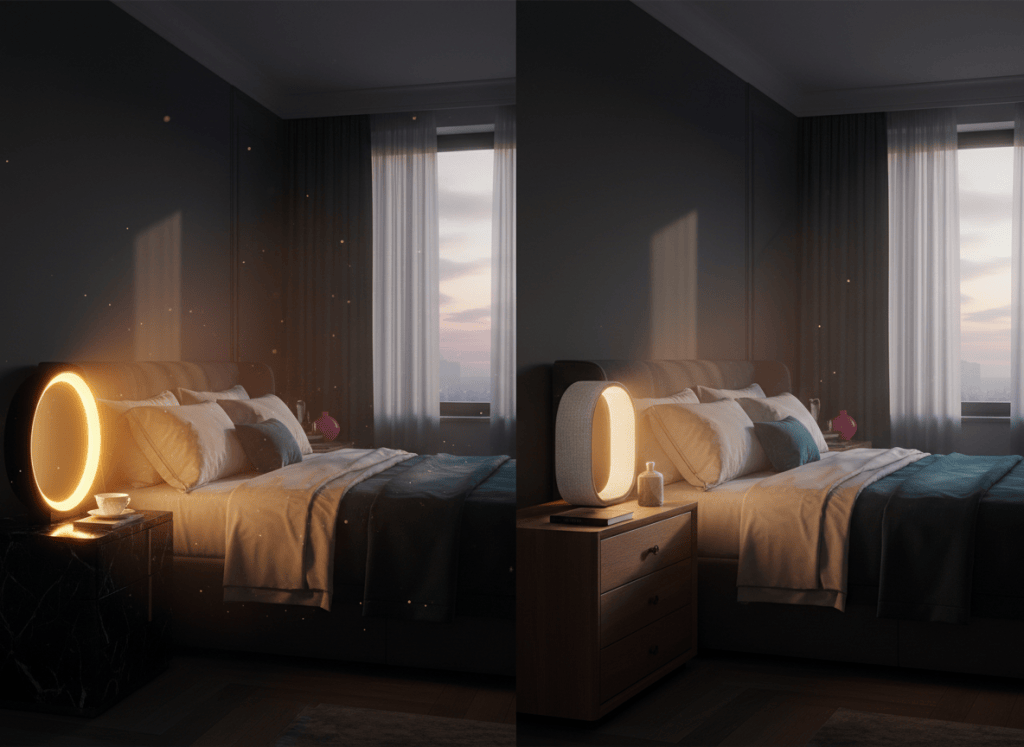
Artwork disclosure: Cover art is AI-generated Honey Be Honest editorial artwork and is illustrative rather than a photograph of the exact products.


Leave a comment