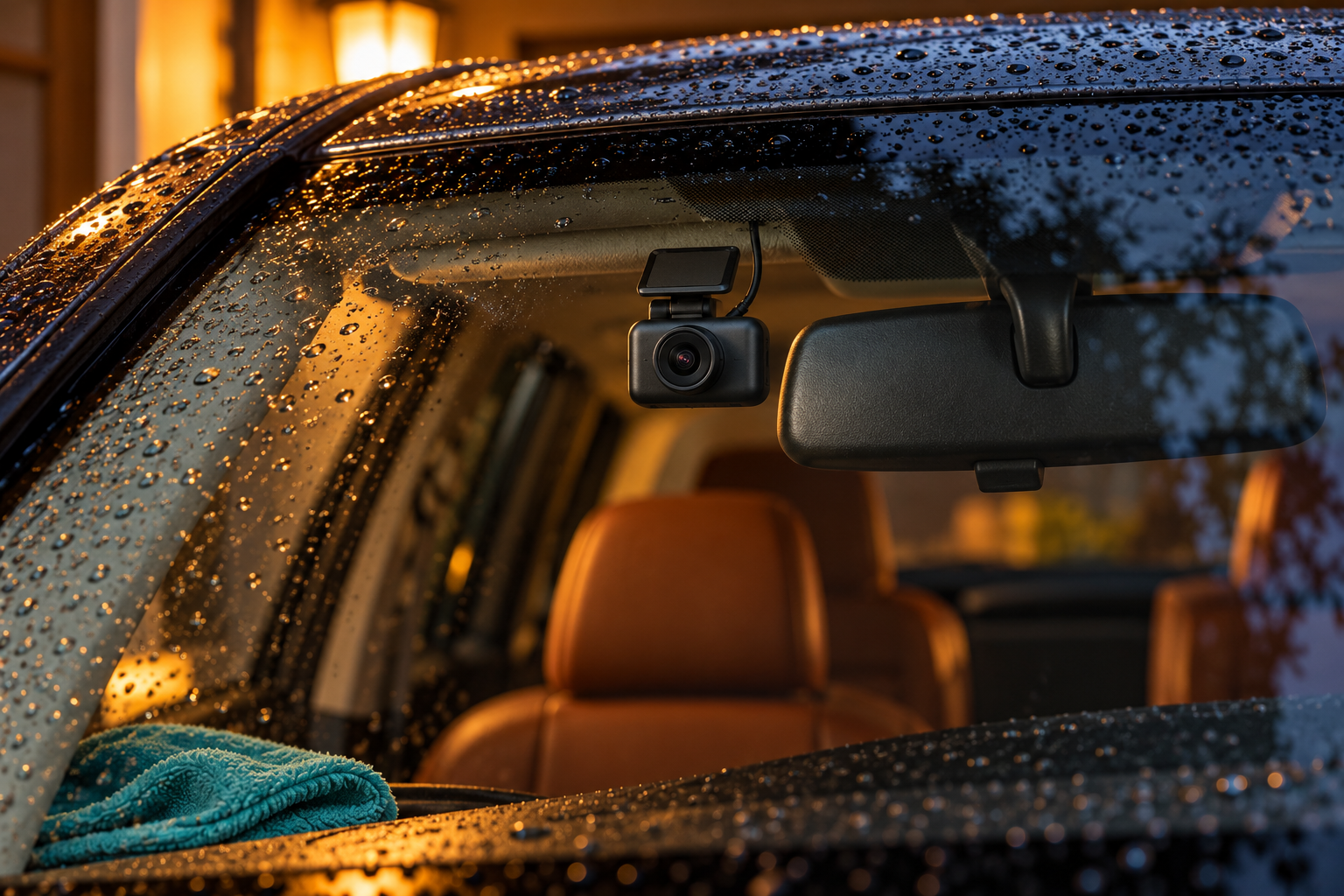
VERDICT: I would choose the VIOFO A229 Pro 2CH for front-and-rear coverage when the larger budget makes sense, Garmin Mini 3 when a discreet front camera is the priority, and REDTIGER F7NP when two cameras need to fit a smaller budget. Those are buying recommendations based on specifications and published testing, not a three-way road test I performed. I would price the memory card and parking-power setup before deciding which camera is actually the bargain.
A dash cam has one job I care about: give me a useful recording when the details matter. It does not need to turn my commute into an award-winning documentary. It does need to cover the direction I care about, keep recording, and let me retrieve the clip without a research fellowship.
The first decision is coverage. A tiny forward-facing camera and a front-and-rear kit are different purchases, even when the price tags get close.
The comparison that matters before checkout
| Exact model | Recording coverage | My reason to consider it | Observed US camera price | Budget beyond the camera |
|---|---|---|---|---|
| VIOFO A229 Pro 2CH | 4K front + 2K rear | My higher-budget choice for two directions | $349.99, VIOFO direct | Compatible microSD; parking-power hardware and installation if wanted |
| Garmin Dash Cam Mini 3, 010-02899-00 | 1080p front | Small, discreet installation | $99.99 displayed sale price, Best Buy | microSD; constant power for parking use; paid services for remote features |
| REDTIGER F7NP | 4K front + 1080p rear | Lower-cost dual-camera option | Direct page displayed $99.99 without card or $149.99 with 128GB | Confirm exact card and hardwire bundle; installation remains separate |
Prices are page observations checked October 15, 2026, before tax, delivery or installation; they are not Amazon prices or guaranteed checkout totals. The VIOFO listing, Best Buy Mini 3 listing, and REDTIGER configurations identify those offers. REDTIGER’s page contains conflicting promotional and bundle wording, so confirm the selected contents rather than relying on its savings badge.
Affiliate disclosure: As an Amazon Associate I earn from qualifying purchases. If you buy through a paid link, I may earn a commission at no extra cost to you. Prices, sellers and packages can change.
Still deciding? Answer three quick questions and I’ll help you sort the fit from the fine print. Find my fit →
VIOFO A229 Pro 2CH: where I would put the bigger budget
VIOFO’s two-camera kit pairs Sony STARVIS 2 front and rear sensors, HDR, and GPS. A memory card is sold separately. The rear camera is a concrete reason to spend more than I would on a front-only setup; it adds another view, not a promise that every incident or plate will be captured. VIOFO’s exact 2CH specifications.
There is useful independent evidence, with a qualification. TechRadar’s A229 Pro review found strong day and night footage, but tested the three-camera package. It identifies the same front and rear sensor models; I treat that as supporting evidence for the camera family, not a controlled test of this exact two-camera purchase or proof it beats both rivals in identical conditions.
My reason to choose VIOFO is the combination of two-direction coverage and that supporting evidence. My reason to pause is the complete bill. I would rather budget for a properly installed system than spend everything on cameras and leave the rear unit in the box.
Check the VIOFO A229 Pro front-and-rear kit on Amazon.
Garmin Mini 3: when small is the feature
Garmin’s appeal is restraint. The Mini 3 has a built-in polarizer, but no screen or onboard GPS. Setup and viewing rely on a phone or computer rather than a display on the camera. A microSD card is not included. TechRadar’s Mini 3 review.
That reviewer found clear daytime footage and useful nighttime context, with number plates less reliably readable after dark. That is a more useful expectation than assuming either “1080p is useless” or “a camera means I will always get the plate.”
I would buy it for a modest visual footprint and a forward view. I would not choose this single unit if rear coverage were my central reason for shopping. A discreet camera can be the right answer without being the answer to every direction.
Already have a camera that records well and lets you retrieve clips? I would check its condition and actual footage before buying a replacement just because a smaller one exists.
Check the Garmin Dash Cam Mini 3 on Amazon.
REDTIGER F7NP: the budget choice needs an itemized receipt
The F7NP earns its place here as a less expensive way to add a rear view. I did not find comparable independent nighttime testing for this exact model in the reviewed evidence, so its night-vision marketing does not earn it a nighttime victory.
The direct page advertises a free hardwire kit with its selected configurations, while its FAQ says the kit is separate. I would get the included equipment confirmed before paying. That matters more than a large percentage-off label. REDTIGER’s product page.
The linked Amazon variant identifies a 128GB card. That does not establish that its offer includes the direct store’s hardwire promotion. Treat the seller, selected bundle and contents as part of the comparison, not details to discover when the parcel arrives.
Check the REDTIGER F7NP with 128GB card on Amazon.
Parking mode has its own shopping list
I would separate three budgets: recording while driving, recording while parked, and checking the camera remotely. A feature name on the box does not make those the same purchase.
For VIOFO, the compatible HK4 hardwire kit lists $17.99 without fuses, $22.99 with a selected two-fuse option, or $25.99 with the full fuse set. Its voltage cutoff stops supplying power at the selected threshold; that is a limit on recording, not a guarantee of unlimited parking coverage. VIOFO HK4 details.
For Garmin, remote Live View requires an active Vault subscription and a Wi-Fi network connection. Plan for power while the vehicle is parked, too. The camera’s Wi-Fi feature does not supply internet service to a distant parking lot. Garmin’s remote-view instructions.
I would get a vehicle-specific quote for the right power equipment and installation before calling any setup an all-in bargain. A free cable does not install itself. Neither does a paid one, which feels rude but remains true.
Before the camera becomes part of the car
Choose a compatible card and follow the camera’s formatting instructions. Garmin, for example, specifies microSDHC or microSDXC, 8–512GB, Class 10 or higher, formatted FAT32. Those are Garmin’s requirements; use each model’s own guidance rather than transferring one camera’s card specifications to another. Mini 3 memory-card requirements.
My first check after installation would be a short recording and playback while safely parked: correct camera angle, readable date and time, and a clip I can actually save. I would repeat that check after changing a card or important settings. That is my practical buying advice, not a claim that I have tested these three units.
Check applicable mounting and recording rules where you drive before installation; Garmin’s product information warns that some jurisdictions regulate or prohibit use. I would check audio-recording requirements separately before leaving the microphone enabled. Garmin’s product warning at Best Buy.
If you are also sorting out the practical equipment that lives in the car, my portable tire inflator comparison looks at another purchase where the useful details matter more than an impressive headline number.
Honey, be honest: I need the clip, not a film festival
I would pick the direction I need covered, set a budget that includes making the camera work, and then choose the model. VIOFO is my higher-budget dual-camera pick; Garmin makes sense when a small front camera is enough; REDTIGER is the budget dual-camera candidate once the bundle is confirmed.
And if the camera already on your windshield does the job? Give it a card and playback check before giving somebody else your money. The useful upgrade is better evidence when you need it—not another box with “4K” in a very confident font.
Love, Honey.


Leave a Reply