VERDICT: I would shortlist the NS-LGC05 for small everyday batches, the NS-TSC10 for larger batches plus steaming and cake settings, and the NS-ZCC10 when rice texture choices matter most. Check the exact grain’s capacity in the supplied rice-cup units before buying. Dinner deserves enough rice, not a surprise lesson in cup sizes.
Affiliate disclosure: As an Amazon Associate I earn from qualifying purchases. If you buy through a paid link, I may earn a commission at no extra cost to you. Prices, sellers and packages can change.
Quick Comparison
| Option | Best for | Watch this | Amazon |
|---|---|---|---|
| Zojirushi NS-TSC10 | 5.5-cup flexibility + steam setting | Check which extra cooking functions I will really use. | Search Amazon (paid link) |
| Zojirushi NS-ZCC10 | Rice-focused 5.5-cup fuzzy-logic cooking | Choose it for rice priorities, not novelty extras. | Search Amazon (paid link) |
| Zojirushi NS-LGC05 | Smaller 3-cup households | Smaller capacity can be an advantage for everyday batches. | Search Amazon (paid link) |
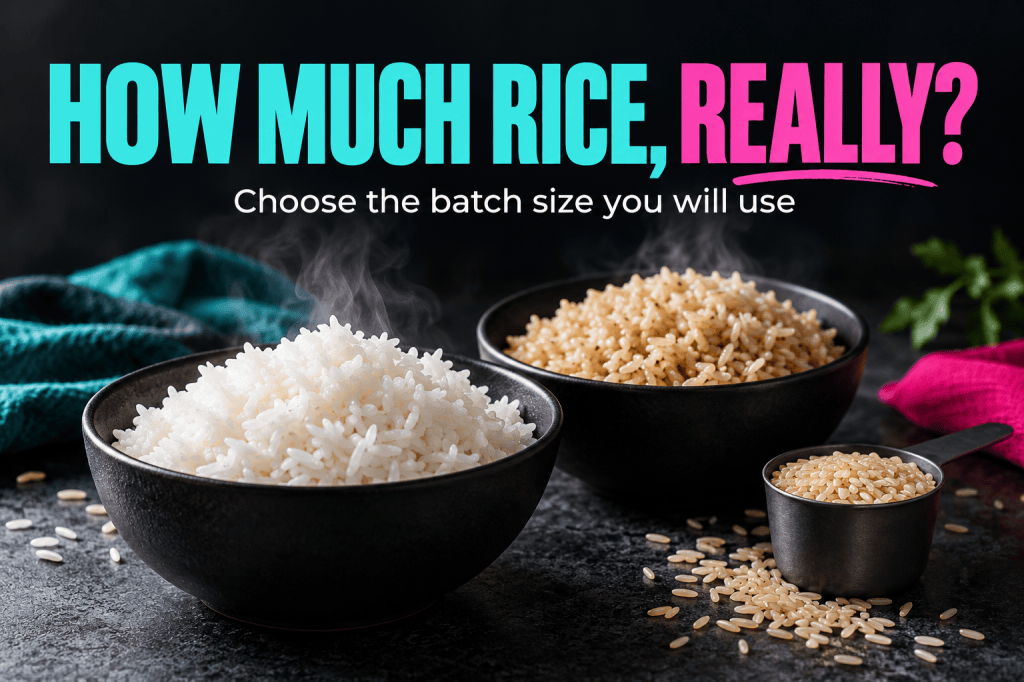
These are the supplied approximately 180 mL rice cups, not US kitchen measuring cups. White means the regular short/medium-grain white-rice category; brown means short/medium-grain brown rice. Other grains and menu settings have different limits. TSC manual, ZCC manual, LGC manual.
First, “5.5 cups” is not your dinner yield
Zojirushi specifies these headline capacities using raw short-grain white rice and its included cup. That is not a promise of 5.5 servings, 5.5 US cups or the same amount of cooked food from every grain. The appliance label is a loading limit, not a guest list. Manufacturer capacity explanation.
Here is the useful shopping exercise: write down your normal uncooked batch using the appropriate rice measure. Then note your largest genuinely recurring batch. If those are wildly different, decide whether you are buying for Tuesday or for Thanksgiving. There is no universal household-size answer because one person’s rice is a side dish and another person’s rice is the meal.
Brown-rice households should compare the brown column first. Buying against the largest white-rice number and discovering the lower brown-rice limit later is a very boring way to regret an expensive appliance. Follow the specific grain’s water instructions; do not treat every line inside the pot as interchangeable.
NS-TSC10XJ: the useful extras choice
The TSC10 combines its 5.5-cup size with a steaming basket and dedicated Steam and Cake menu options. It also lists automatic and extended keep-warm functions, reheating and two delay-timer settings. Zojirushi NS-TSC10/18.
Why it makes sense: imagine your actual week. Would a steaming function replace a task you already do? Would you really use the cake program with an appropriate recipe? If yes, the feature list has a job. If no, you are shopping for a future personality, and she already has enough kitchen equipment.
The catch: this comparison is for NS-TSC10, not the similarly named NS-TSC10A. Check the model plate and listing suffix rather than assuming a retailer’s photograph settles it. A different suffix requires its own feature check.
Buy it if the larger batch range and multipurpose functions both fit your meals. Skip it if you mostly need half-cup white-rice batches or chiefly want the ZCC’s texture selections.
NS-ZCC10WZ: rice preferences before extra cooking jobs
The ZCC10 lists white-rice softer/harder choices alongside regular/sushi, mixed, porridge, sweet, semi-brown, brown, rinse-free and quick-cooking options. Its removable inner pan has stay-cool side handles; the published accessory list includes regular and rinse-free measuring cups. Zojirushi NS-ZCC10/18.
Why it makes sense: if your purchase starts with “I am picky about my rice,” this is the more relevant comparison than counting unrelated programs. The ability to select a preference is a feature I can document. Whether you personally prefer the finished texture is not something a specifications table can decide for you.
The catch: its standard white-rice capacity is no larger than the TSC10’s. The extra reason to consider it is not an extra serving hiding inside the casing. Neither a brand name nor a menu label proves better taste.
Buy it if rice-specific controls address a real preference. Skip it if you are primarily trying to add a steaming basket or a dedicated cake function to your kitchen.
NS-LGC05XB: smaller does not mean pointless
The LGC05 has a 3-cup headline capacity, long-grain white, steel-cut oatmeal and GABA brown menu settings. Zojirushi lists it at 9⅛ inches wide, 11⅞ deep and 7½ high, closed. Zojirushi NS-LGC05.
Its manual permits a half-cup minimum for regular white and brown rice, while the corresponding minimums on the two larger machines are one cup. The LGC’s brown-rice maximum is two cups, not three. LGC manual.
Why it makes sense: the best capacity is the one you use comfortably. A smaller cooker belongs on the shortlist if the everyday batch is small and cupboard space is precious. Measure your intended position with room to operate the lid; closed dimensions are not operating-clearance instructions.
The catch: do not buy small just because the countertop photograph looks cute. If your normal brown-rice batch exceeds the documented limit, this is the wrong capacity.
Buy it if smaller regular batches fit the manual. Skip it if you already know you need the larger machines’ batch range.
The graph: white-rice capacity is only half the story
TSC10 white: 5.5 supplied cups
TSC10 brown: 4 supplied cups
ZCC10 white: 5.5 supplied cups
ZCC10 brown: 4 supplied cups
LGC05 white: 3 supplied cups
LGC05 brown: 2 supplied cups
Common scale: 0–6 supplied cups. Manufacturer specifications, not HBH test results. See the cited manufacturer sources and limitations in this comparison.
The zero-based graph compares maximum raw short/medium-grain rice, using the same approximately 180 mL supplied-cup unit. It does not show cooked yield, servings, cooking speed or quality. Values are from the three model manuals checked October 4, 2026. Other menu limits differ.
Before you check out, check these boring things
First, match the complete model number and US electrical version. Then compare the actual package, condition, seller, warranty eligibility and return terms—not just a search-result title. An attractive photo is not an inventory list.
Second, plan the cleanup. Zojirushi’s FAQ says its rice-cooker parts and accessories are not dishwasher-safe. If “everything goes in the dishwasher” is your nonnegotiable routine, learn that now. The manufacturer also offers replacement parts by model, so retain that number rather than assuming similar-looking pans interchange. Rice-cooker FAQ.
Third, skip numerical performance assumptions. These specifications do not establish the fastest rice, the lowest real electricity bill or a winner in a blind tasting. I am selecting features and capacity, not pretending the appliance auditioned in my kitchen.
So, which one would I shortlist?
Start with the LGC05 for genuinely small batches, the TSC10 for larger batches plus its extra cooking functions, and the ZCC10 when rice texture choices are the actual reason you are upgrading. If the present cooker already makes rice you like in the quantities you need, keeping it is a perfectly respectable recommendation. I do not need to turn every Tuesday dinner into a purchasing event.
Can I use my regular cup? Use the measuring system and water instructions specified by the exact model; do not substitute a US cup into a rice-cup recipe unchanged.
Will one batch feed my whole family? Compare your measured uncooked batch with the correct grain limit. This article deliberately does not invent a universal serving count.
What about the rest of the kitchen? My kitchen-scale comparison covers a different measurement problem: choosing a readable scale. It does not replace the rice cooker’s own cup and water directions.
Dinner needs enough rice and fewer surprises. That is the upgrade worth paying attention to.
Honey, Be Honest: Why I Went Looking
I went looking because rice-cooker capacity turns into a tiny math trap the second the manufacturer starts talking in rice cups instead of the measuring cup in my drawer. I just want dinner, not an international summit on cup definitions.


Leave a Reply